Itinerary Overview
Amsterdam/Bucharest
Route Map

Daily Itinerary
Day 1 Jun 21, 2026 - Amsterdam
Cosmopolitan Amsterdam is most famous for its narrow, gabled houses lining the canals. Interesting attractions include the medieval weighhouse, Royal Palace on Dam Square, and New Church. Its most glamorous industry is the diamond trade. Not too far from Amsterdam are the flower centers of Aalsmeer, the picturesque fishing villages of Volendam and Marken, cheese markets at Edam and Gouda, and historic Haarlem, the main center of the bulb-growing industry. Enjoy the city’s sights from a glass-topped sightseeing boat which passes characteristic gabled houses and negotiates picturesque arched bridges. Facing Dam Square, the Royal Palace was built in 1648 and is still officially the royal residence, although the royal family resides in The Hague. The marbled Citizens Hall with inlaid maps of the world is worth seeing. One of Amsterdam’s most visited sites is historic Anne Frank House. Rijksmuseum, the city’s most prestigious museum, houses the largest collection of Dutch paintings in the world. Van Gogh Museum houses a striking collection.
Day 2 Jun 22, 2026 - Cologne
Cologne is a city where cathedral spires tower over Germany's oldest city and its innumerable cultural and historical treasures, world-famous museums and active art scene. In Cologne, street music on the Hohe Strasse or galas in the modern opera house; pavement painting on the cathedral concourse or old masters in the Wallraf Richartz Museum; the annual music festival along the inner ring road or carnival in the entire city all becomes synthesized into a vivacious work of art in a cosmopolitan metropolis boasting more than a million inhabitants which has never lost its neighborly character. From venerable breweries offering unique Kolsch beer and typical Cologne delicacies to first-class restaurants - boasting well in excess of 3000 public houses, restaurants and breweries Cologne is one of Germany's leading gastronomic lights. The world feels at home in Cologne, where people meet for a Kolsch, a chat or simply a laugh.
Day 3 Jun 23, 2026 - Rudesheim
Rüdesheim is located in the heart of the Rhine river area at the southern entrance to the Lorelei valley. This romantic holiday town offers much to visitors seeking a fabulous German experience. As you cruise down the Rhine, if you listen carefully, you just might hear the siren calling as you pass the Rock of Lorelei. One attraction to visit is the Niederwald monument. Erected between 1877 and 1883, this huge monument symbolizes the re-establishment of the German Empire and unity. From Rudesheim, one can either take the foot path to the monument or the cablecar leading to the top. The panoramic views from the top are spectacular. Rudesheim is also famous for the Abbey of St. Hildegard. Some think the building is older than it is, but truly, it was built at the beginning of the 20th century. Other sites to see are the Wine Museum in Broemserburg Castle, Siegfried's Mechanical Music Instruments Museum and the Medieval Torture Museum, which boasts a wide collection of medeival relics.
Day 4 Jun 24, 2026 - Frankfurt
Frankfurt is the city of the International Book Fair, the National Library - a city encompassing a variety of publishing houses, libraries and bookshops. In its museums, exhibition halls, and art galleries, Frankfurt displays its distinct style of contemporary and historical art and culture. Frankfurt's highrises form part of the city's identity. The skyline is unique, thanks to its extraordinary architectural blend of tradition and modernity. Europe's largest skyscraper is also situated here, the Commerzbank building. Frankfurt is home to one of the world's finest ballet ensembles. Frankfurt is a metropolis for techno and dance music, which lends the city a reputation of musical magnetism. The city's numerous theaters and theater groups, the opera, and the concert house Alte Oper offer Frankfurt's stage aficionados and lovers of fine arts a comprehensive and diverse program.
Day 5 Jun 25, 2026 - Wertheim
Wertheim is an important city with a historic past that has remained true to its medieval roots. Wertheim's claim to fame is its fabulous castle ruins. Positioned on the cornerhills between the rivers, the Burg Wertheim appears quite striking on first glance, leaving little indication of the many times it has been conquered, destroyed, and rebuilt. The Pointed Tower (Spitzeturm) is the most prominent of the city towers still standing.
Day 6 Jun 26, 2026 - Wurzburg
The historic bishopric of Würzburg on the river Main is now the capital of Lower Franconia. Surrounded by sloping hills covered with vineyards, Würzburg is a centre of the wine trade. Visit the cathedral, the Neumünster church, the Marienkapelle and the old town hall. The true highlight is the former episcopal residence built from 1719 to 1744. This splendid example of German Baroque architecture is the most important secular building of the period. It features a grand staircase with a magnificent fresco by Giovanni Tiepolo.
Day 7 Jun 27, 2026 - Kitzingen
Part of the German state of Bavaria in the Franconia region, Kitzingen is surrounded by vineyards and produces the most wine in Bavaria. A 13th century leaning tower stands as Kitzingen's main landmark, and is said to have been caused by wine replacing water in the mortar. Kitzingen hosts an open-air wine festival, and is vibrant with Renaissance flair, such as the town hall and market square, whose old architecture remains indicative of the city's long history.
Day 8 Jun 28, 2026 - Bamberg
Bamberg is a historical yet dynamic city. It is a town of complementary tradition and progress. The locals like to stress their city spreads across seven hills like Rome, has a network of waterways like Venice, and an old city which is at least as beautiful as Prague and on which the same architects left their unmistakable mark. Old Town Hall, which parts the flow of the River Regnitz, can only be reached by two stone bridges; the Romanesque/Gothic Cathedral is endowed with four unique towers; the picturesque fishermen's houses of "Little Venice" prop each other up on the river bank and the magnificent New Residence boasts a splendid baroque room known as the Emperor's Hall. In summer, Bamberg's beer cellars or "Keller" are a special attraction. The locals and tourists appreciate a locally brewed beer and savor a typical Franconian snack. Bamberg is lovely for those who also enjoy a stroll. The possibilities are many and include the Hain, an extensive wooded park on the periphery, or the pretty paths along the canals and the River Regnitz.
Day 9 Jun 29, 2026 - Nuremberg
The second largest city in Bavaria, Nuremberg is a glowing testament to medieval culture as evidenced in its historic monuments, Gothic churches and elegant patrician houses. Take a walk around the 13th-century city walls, complete with moats, watchtowers and gateways. Then experience "shopping" as it was in the Middle Ages at the Handwerker Hof, a charming "mediaeval mall". Don't forget to sample the city's famous Bratwürste annd Lebkuchen.
Day 10 Jun 30, 2026 - Regensburg
Regensburg is located in Bavaria, one of the most distinctive regions of the entire nation. It is an ancient city. Settled first by the Celts in prehistoric times, it was a Roman center for centuries and the site of an important bishopric in the Middle Ages and after. Regensburg is now a thriving city of approximately 150,000 and is a major port on the Danube with beautiful and well-preserved architecture as well as striking, modern buildings. It is only a short distance from both Munich and Nuremberg and within easy access of Vienna, Prague, and other major centers of Central Europe.
Day 11 Jul 01, 2026 - Passau
In the third millennium, Passau was considerably enlarged by the prince bishops of Passau, who made it their royal residence and capital of the largest Danube diocese. The wonderful Baroque buildings dominating the city today were built after a fire of 1662. One of the most striking is cathedral of St. Stephan, with the world's biggest church organ. One of the best ways to enjoy the magic of Passau is with a sightseeing tour. Other sights to see include: Neue Residenz - an Episcopal palace; Veste Oberhaus - Citadel of the prince bishops with the best view of the Old Town and confluence of the three rivers; Town Hall, which is lavishly decorated halls with monumental paintings; Niedernburg Abbey - tomb of Gisela, first queen of Hungary; Maria Hilf - an abbey and place of pilgrimage overlooking the town center; Dreiflusse-Eck - the confluence of the Danube, Inn and Ilz; and St. Nikolai - a University church with Romanesque crypt.
Day 12 Jul 02, 2026 - Weissenkirchen
Weissenkirchen, or "White Church", is a charming town sprawled along the banks and the hills of the Danube River. Like other villages in the Wauchau Valley, you can see terraced vineyards, off-set by the red roofs of the town proper. View the white church the town is named for, which in its long history has served both as sacred space and protection from invaders in the the 16th century. You will find the inside designed in the traditional Gothic and Baroque style. Visit the Wachaumuseum, housed in a 16th century building, to learn more about Weissenkirchen's role in wine production, as well as the importance of the salt trade in the town's development and art by Krems painter Kremser Schmidt. Nearby villages include Krems and Dürnstein, while further up stream you can visit the Göttweig Abbey and Melk.
Day 13 Jul 03, 2026 - Vienna
Vienna is dominated by imperial castles and places: Schonbrunn, the magnificent summer residence, the Imperial Coach Collection, the Palm House, the Butterfly House, Belvedere Palace, magnificent state rooms in Hofburg, and the imperial crown in the Treasury. Stop by Ringstraße - the showplace of the monarchy built where Emperor Franz Joseph ordered the demolition of city walls. Important buildings include the State Opera, the Museums of Fine Arts and Natural History, Parliament, City Hall and Vienna University. The world capital of music. A long line of great composers Johann Strauss, Haydn and Mozart, Beethoven and Schubert, Mahler and Schonberg all worked here. A city with splendid concert halls, such as the Golden Hall, from which the Philharmonic's New Year's Day concert is broadcast annually. International stars love to appear here in the State Opera, Volksoper, Konzerthaus, and at festivals like the Vienna Festival, the Klangbogen concerts during the Musical Summer, the Jazz Festval and the Haydn, Mozart and Schubert festivals.
Day 14 Jul 04, 2026 - Budapest
Caught between eastern and western Europe, Budapest has a character uniquely its own. It's also the last cheap, civilised city in Europe. Budapest can seem like one big sight, with each phase in its history, from the Ottoman period until the Communist days and from renaissance to revolution, leaving its mark on the city. For the tourist, a trip to Hungary's capital is dominated by the majestic sights of Buda. In the summer, there are open-air festivals at Szeged, Diosgyor Castle in Miskolc, Gyor and Pecs. Visit the former Royal Palace complex, the Matyas templom and the Belvaros. Margaret Island is a giant recreational park and feels pleasantly separated from the city bustle. Hungarian National Gallery houses Hungarian art since the birth of the nation. Although Esztergom is Hungary's most sacred city, home of the Archbishop and the nation's biggest church, it has a real-life edge. The first-time visitor to Szeged is invariably struck by its space and grandeur. One's immediate impressions of Hungary's third largest provincial city are of greenery and plazas, of broad.
Day 15 Jul 05, 2026 - Budapest
Caught between eastern and western Europe, Budapest has a character uniquely its own. It's also the last cheap, civilised city in Europe. Budapest can seem like one big sight, with each phase in its history, from the Ottoman period until the Communist days and from renaissance to revolution, leaving its mark on the city. For the tourist, a trip to Hungary's capital is dominated by the majestic sights of Buda. In the summer, there are open-air festivals at Szeged, Diosgyor Castle in Miskolc, Gyor and Pecs. Visit the former Royal Palace complex, the Matyas templom and the Belvaros. Margaret Island is a giant recreational park and feels pleasantly separated from the city bustle. Hungarian National Gallery houses Hungarian art since the birth of the nation. Although Esztergom is Hungary's most sacred city, home of the Archbishop and the nation's biggest church, it has a real-life edge. The first-time visitor to Szeged is invariably struck by its space and grandeur. One's immediate impressions of Hungary's third largest provincial city are of greenery and plazas, of broad.
Day 16 Jul 06, 2026 - Budapest
Caught between eastern and western Europe, Budapest has a character uniquely its own. It's also the last cheap, civilised city in Europe. Budapest can seem like one big sight, with each phase in its history, from the Ottoman period until the Communist days and from renaissance to revolution, leaving its mark on the city. For the tourist, a trip to Hungary's capital is dominated by the majestic sights of Buda. In the summer, there are open-air festivals at Szeged, Diosgyor Castle in Miskolc, Gyor and Pecs. Visit the former Royal Palace complex, the Matyas templom and the Belvaros. Margaret Island is a giant recreational park and feels pleasantly separated from the city bustle. Hungarian National Gallery houses Hungarian art since the birth of the nation. Although Esztergom is Hungary's most sacred city, home of the Archbishop and the nation's biggest church, it has a real-life edge. The first-time visitor to Szeged is invariably struck by its space and grandeur. One's immediate impressions of Hungary's third largest provincial city are of greenery and plazas, of broad.
Day 17 Jul 07, 2026 - Batina
Batina is a little village on the border of the Baranja region in Croatia. Batina features a recreational and bathing resort "Zeleni Otok" (Green Island) and a number of opportunities in the warm part of the year for water sports. It is also the center of the Baranja Art Colony.
Day 18 Jul 08, 2026 - Belgrade
Belgrade is the capital of Serbia with about 1.6 million inhabitants. It is located in southeast Europe, in the Balkan Peninsula, at the confluence of the Sava and Danube rivers. It is one of the oldest cities in Europe and since ancient times it has been an important traffic focal point, an intersection of the roads of Eastern and Western Europe. Belgrade is the capital of Serbian culture, education, science and economy. As a result of its tumultuous history, many nations live in Belgrade for centuries, and the majority of the population make Serbs (86%) of Orthodox persuasion.
Day 19 Jul 09, 2026 - Golubac
Day 20 Jul 10, 2026 - Vidin
The town is situated at 199 km north-west of Sofia, on the right bank of Dunabe it is linked with Kalafat town (in Romania) by a ferry. A major factor making the city a resort is the availability of mineral water. Vidin is one of the oldest towns along the Bulgarian Danube bank. It appears as the Roman fortress of Bononia on the foundations of a Thracian settlement. During the First Bulgarian Kingdom it is known as Budin (Bdin). Bishop's centre. During the Second Bulgarian Kingdom it is a strong fortress and after 1371 a capital of the Vidin Kingdom under Tsar Ivan Sratsimir. To this day the following sites have been preserved: Baba Vida fortress, built in the 9th-10th centuries on the ruins of a Roman fortress (rebuilt many times, its present appearance dating back to the 18th C.), the Turkish konak (the second half of the 18th C.), the mosque and library of Osman Nuri Pasha, the cruciform barracks of 1798, old Renaissance buildings, a synagogue.
Day 21 Jul 11, 2026 - Rousse
Rousse is an ancient Bulgarian port on the Danube River. People originally settled there because the river produced a living. Today the municipality enjoys a rich cultural lifestyle, hosting an Arts and Culture club, the Rousse Art Gallery, a community art center for children, and the Sava Ognyanov Drama Theatre, one of the most successful professional theatre companies in Bulgaria.
Day 22 Jul 12, 2026 - Giurgiu
The Giurgiu County is situated in the Southern part of Romania, on the middle course of the Danube River, as a part of the Romanian Plain. The Southern border of the county washed by the Danube on a length of 72 km gives it the possibility to have river connections (including the way to the Black Sea) with the Danubian countries from the Central and Eastern Europe. Since 1993 when the Rhin-Main-Danube was finished, an opening to the West-European countries was created being possible to reach the North Sea via Rotterdam. The Giurgiu-Ruse road and railway bridge, the only permanent cross over the Danube to Bulgaria, offers also connections to the countries of Central Europe, from and to the Balkan Peninsula and Middle Asia. The Giurgiu county has a diversified industrial production, but being situated in a predominant agricol region its main wealth consists in agricultural activities (cereals, vegetables and vine). The opening of the Free Zone of Giurgiu, the short distance to Bucharest and Bulgaria will offer new opportunities in the development of this county. The natural landscape, interesting historic places offer to tourists some points of attraction. For example, in the village of Comana, on the bank of the Neajlov River, there is a monastery built by ruler Vlad Tepes which is documentary dated back from 1461. The Monuments from Calugareni, placed on the road between Bucharest and Giurgiu, are dedicated to the Romanian army led by Mihai the Brave who fought here in 1594-1595 and was admired by the whole Europe after drove away over the Danube the numberless Ottoman army of Sinan Pasha. The capital city of this county is Giurgiu which is documentary dated back from 1395. Among the monuments of Giurgiu the Clock Tower has to be mentioned. Also the "Teohari Antonescu" History Museum is an important and interesting cultural place in Giurgiu.
Day 23 Jul 12, 2026 - Bucharest
Bucharest is the capital and largest city in Romania and is located in the southern part of the country. Referred to as the ‘Paris of the Balkans’, Bucharest has ornate buildings, wide boulevards and gardens fashioned after French architecture and city planning. In the name of progress and modernization, North Korean style buildings began being erected – many of which still stand unfinished today. Sights to see in Bucharest range from the stately to the heavenly. The Palace of Parliament should not be missed while in Bucharest – and it’s hard not to. It’s the second largest building in the world behind the Pentagon. Containing over 1,000 rooms, restaurants, conference areas and an art gallery, it houses the Romanian Parliament. There are several museums in the city, such as the National Art Museum and the Village Museum - an open–air museum containing over 300 houses, churches and mills from all over Romania and displays of some of the best folk architecture in the region. The Antim Monastery and Patriarchate Church are among Bucharest's outstanding religious structures.
Day 24 Jul 13, 2026 - Bucharest
Bucharest is the capital and largest city in Romania and is located in the southern part of the country. Referred to as the ‘Paris of the Balkans’, Bucharest has ornate buildings, wide boulevards and gardens fashioned after French architecture and city planning. In the name of progress and modernization, North Korean style buildings began being erected – many of which still stand unfinished today. Sights to see in Bucharest range from the stately to the heavenly. The Palace of Parliament should not be missed while in Bucharest – and it’s hard not to. It’s the second largest building in the world behind the Pentagon. Containing over 1,000 rooms, restaurants, conference areas and an art gallery, it houses the Romanian Parliament. There are several museums in the city, such as the National Art Museum and the Village Museum - an open–air museum containing over 300 houses, churches and mills from all over Romania and displays of some of the best folk architecture in the region. The Antim Monastery and Patriarchate Church are among Bucharest's outstanding religious structures.
Day 25 Jul 14, 2026 - Bucharest
Bucharest is the capital and largest city in Romania and is located in the southern part of the country. Referred to as the ‘Paris of the Balkans’, Bucharest has ornate buildings, wide boulevards and gardens fashioned after French architecture and city planning. In the name of progress and modernization, North Korean style buildings began being erected – many of which still stand unfinished today. Sights to see in Bucharest range from the stately to the heavenly. The Palace of Parliament should not be missed while in Bucharest – and it’s hard not to. It’s the second largest building in the world behind the Pentagon. Containing over 1,000 rooms, restaurants, conference areas and an art gallery, it houses the Romanian Parliament. There are several museums in the city, such as the National Art Museum and the Village Museum - an open–air museum containing over 300 houses, churches and mills from all over Romania and displays of some of the best folk architecture in the region. The Antim Monastery and Patriarchate Church are among Bucharest's outstanding religious structures.
Stateroom Categories


Included Inclusions & Amenities
Exclusive ADVCRUISES Bonus
- 300 EURO per Couple Shipboard Credit
Accommodations
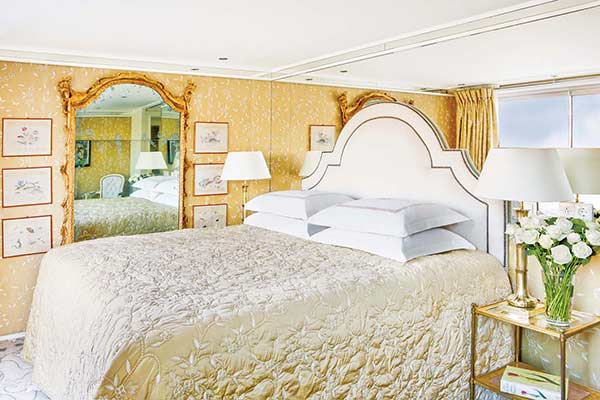
- 21-night cruise in a riverview stateroom on the stunning River Duchess
- 2 nights in Bucharest at The Marmorosch Bucharest hotel (or similar) with breakfast
- Lavishly appointed riverview staterooms and suites have handcrafted Savoir® Beds of England, high thread count 100% Egyptian cotton sheets and European duvets, and a menu of pillow options
- Free Wi-Fi
Dining
- All meals onboard, prepared using the finest and freshest ingredients
- 24 breakfasts, 19 lunches, 22 dinners
- 2 Captain's Welcome and 2 Captain's Farewell Receptions
- 2 Welcome and 2 Farewell Gala Dinners
- Unlimited beverages onboard, including fine wine, beer, spirits, specialty coffee and tea, soft drinks, and mineral water
Excursions
- 21 days of excursions, all fully hosted by English speaking local experts
- Guided “Let's Go” and “Village Day” programs
- State-of-the-art Quietvox portable audio-headset system on all excursions
- Use of bicycles and Nordic walking sticks
Experiences
- 8 countries: Austria, Bulgaria, Croatia, Germany, Hungary, Romania, Serbia, the Netherlands
- 9 UNESCO World Heritage sites
- Services of an experienced Uniworld Cruise Manager
- Gratuities for onboard personnel (ship staff, crew, Cruise/Tour Manager) are included during the cruise/tour
- Cultural enrichment, including captivating onboard local entertainment
Trip Summary
Pricing Terms & Remarks
All fares are per guest in US Dollars based on double occupancy unless otherwise noted. Fares are cruise or cruise/land only and include port charges and government fees/taxes. Fares listed may represent promotions or discounts which would require full payment at time of booking to qualify for the listed discounted fares. Fares are capacity controlled and are subject to change at any time without notice. Availability of all stateroom categories cannot be guaranteed. Single Supplement applies for single accommodation. Itineraries, hotels, and vessels may change, and substitute visits to other sites may occur during your trip due to water level fluctuations and other uncontrollable factors. The order of sightseeing and docking ports are subject to change according to port authority assignments.
TRUE ALL-INCLUSIVE BOUTIQUE RIVER CRUISING™: All gratuities for all onboard and onshore services; unlimited fine wine, beer, spirits, and non-alcoholic beverages; shore excursions with local experts as your guide; free Internet and Wi-Fi; and all arrival and departure day transfers.
All fares are quoted in US Dollars.
